The Mill Race
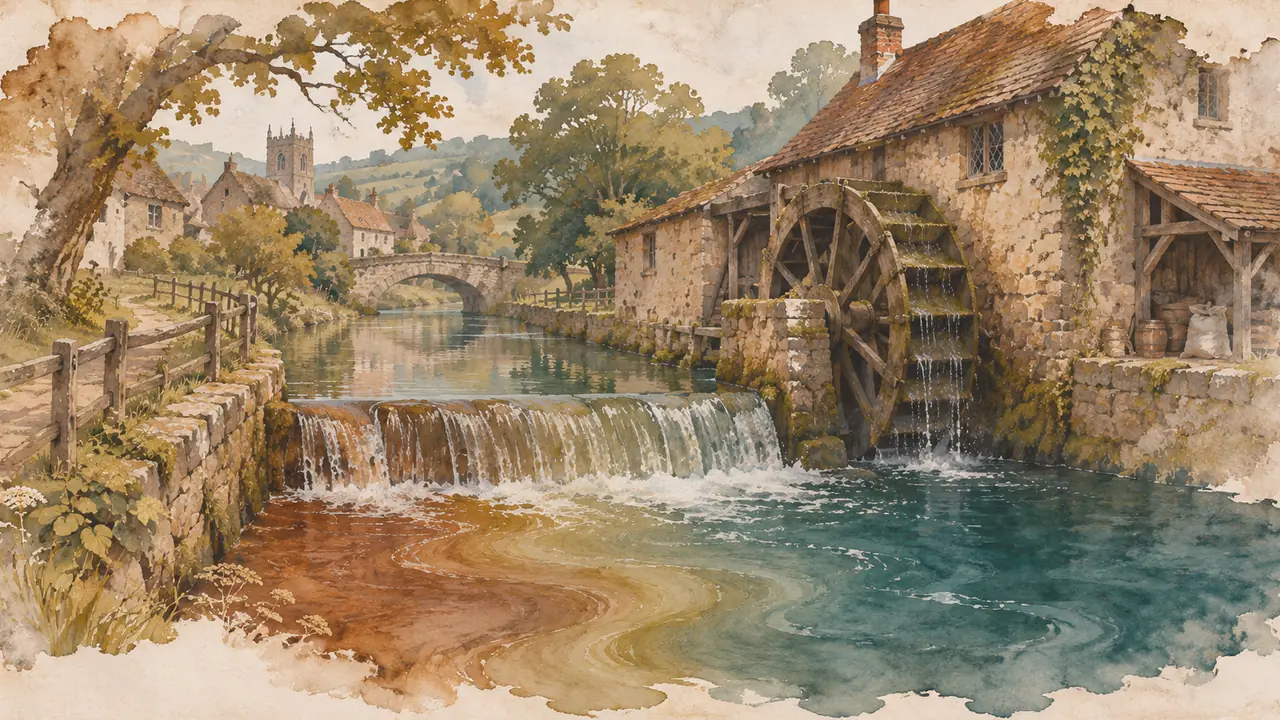
The painter in The Mill Race reaches an old weir where only part of the river remains colored. A shallow bend beside the wheel used to carry a small crossing. There are two ways for a wash to enter the channel. One runs along a dry stone near the upstream path. The other moves quickly toward the mill and can meet a separate color before the painter sees what it has revealed.
Look at where the water is slow enough to hold a mark
At the beginning of the exercise there is a quiet strip of paper beside the left bank. It divides the current from a dry step and gives the player a place to start a narrow stroke. The painter can put a cool wash there and watch it curve toward the lower crossing. Another shade left near the faster water can move farther and uncover part of the upstream path indirectly.
The loop asks the player to choose a starting mark, watch the wash move and use the new view to decide where the painter should walk. On the first attempt a color can reach the wheel before the stepping stones are visible. That outcome leaves a trace of the sluice but not a safe route. A quieter touch near the bank reveals a different part of the mill first.
Keep two colors apart long enough to read them
The first draft blended the washes wherever they met. That result looked rich but erased the separate edges before viewers could describe their paths. We placed a small dry ledge near the weir. It lets one wash maintain a readable front while the other approaches from upstream. Later the colors can meet where the player has a good view of both.
The material uses rust brown around the wooden frame, ochre on the mill path and deep teal in the water. Pale granules remain visible where there is little pigment. A very soft brush sound accompanies the first spread. Separate quiet water under the wheel remains present while the paint is still. Nothing in the sound signals that the player has automatically restored the right route.
Return to the channels after a figure appears
Restoring the stepping stones gives the miller a place to cross. A second character beyond the upstream path needs paint that stays past a different bend. The miller can remain at the first crossing while the player revisits the weir. From there a visibly distinct patch can show which part of the flow they used earlier. The next stroke can revise the remaining channel without erasing the useful point at the crossing.
The Mill Race is in prototype development. Our present exercise tests a channel, dry ledge and brief response further downstream. The weir note records the change in the flow near the dry stone. The meeting wash study explains what stays visible when two fronts touch. Try a small version of the choice through the mill chapter’s brush trial. It holds the options in one view so you can compare the outcomes after trying each stroke.